
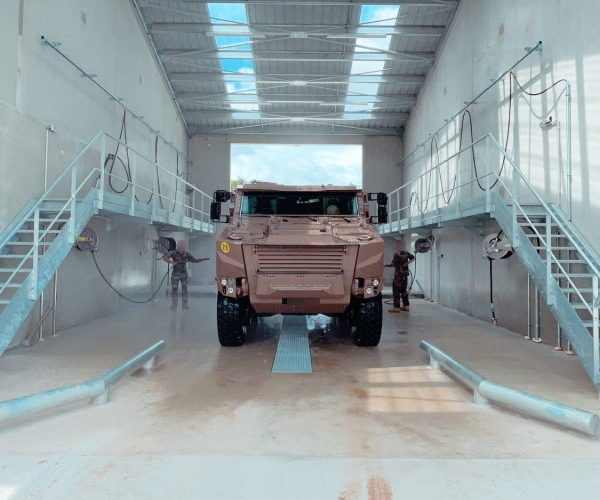
Defence infrastructure facilities wish to have efficient washing facilities suitable for the cleaning of different military vehicles including VBCI and VBMR.
Since the washing operations of VBCI/VBMR are highly water-consuming, a washing water recycling system should be put in place to limit environmental impacts and to limit the cost of the water bill.
Main objective :
- Have a washing area functional and efficient.
- To achieve financial savings recycling vehicle washing water while preserving natural resources.
Secondary objectives :
- Benefit reliable equipment and a partner able to maintain it over time.
- Answer regulatory requirements by the competent authorities.
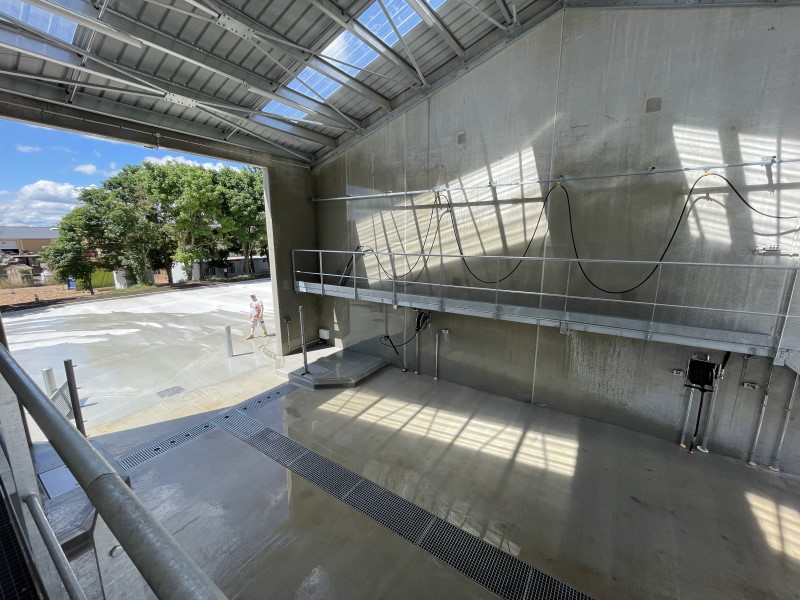
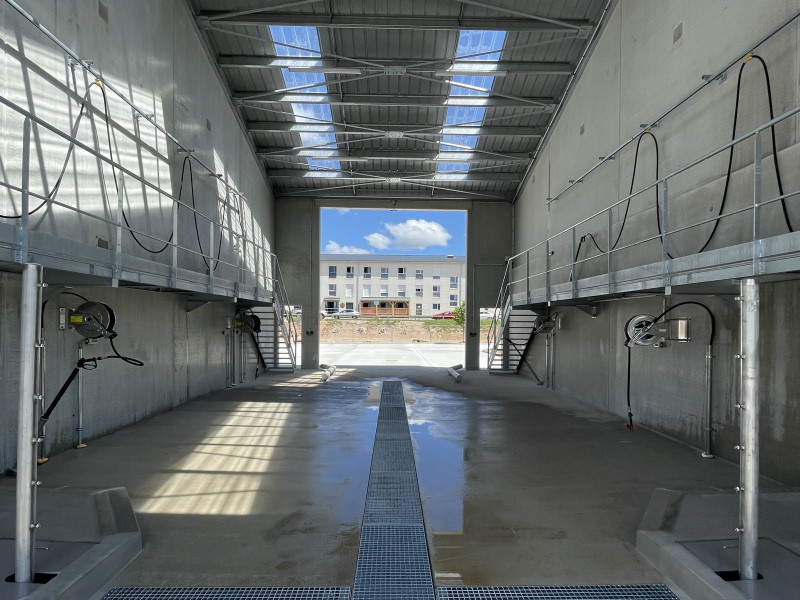
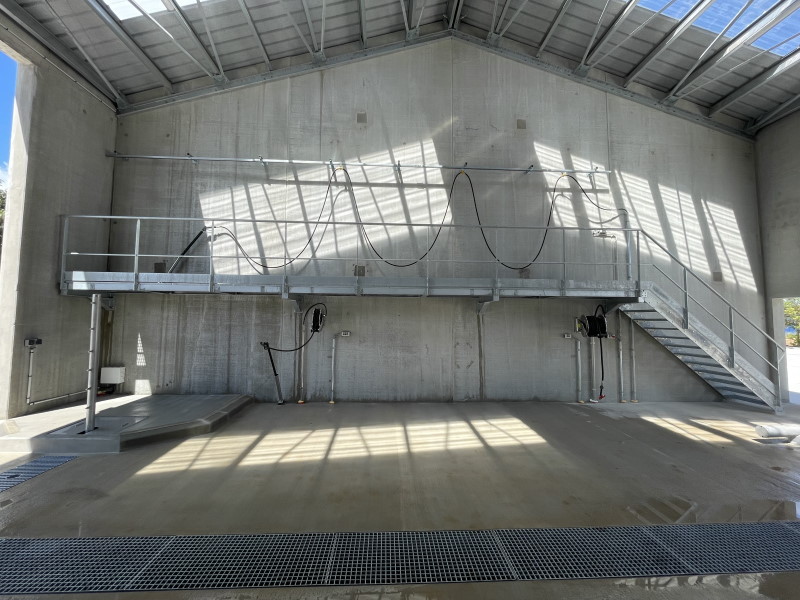
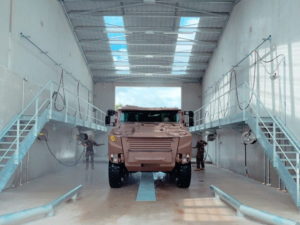
The installed washing station has 3 covered wash bays. Spans 1 and 2 are mainly dedicated to cleaning/derotting VBCI/VBMR and PL. Span 3 is mainly used for finer washing (VL).
- The 3 spans can operate in high pressure at the same time with 2 active wash points per span without loss of power
- When the undercast washing ramp works, other span 1 equipment is inhibited
- The low-pressure wash only works on a lance per span at full flow, the use of a second lance on the same span divides the flow by 2.
The treatment line is broken down into 2 parts:
- Pretreatment (entered): decantation, physical deoiling, oxygenation and lifting
- Secondary (air) treatment: filtration, deoiling, storage and disinfection
The flow of the water is gravitary throughout the part of the buried treatment and from the washing tracks to the recycling line. Then pumps supply the various treatment and storage components.
In case of a lack of recycled water, rainwater automatically supplements the lift tank, in case of a failure of rainwater, the city water supplements the aerial storage tank.



