
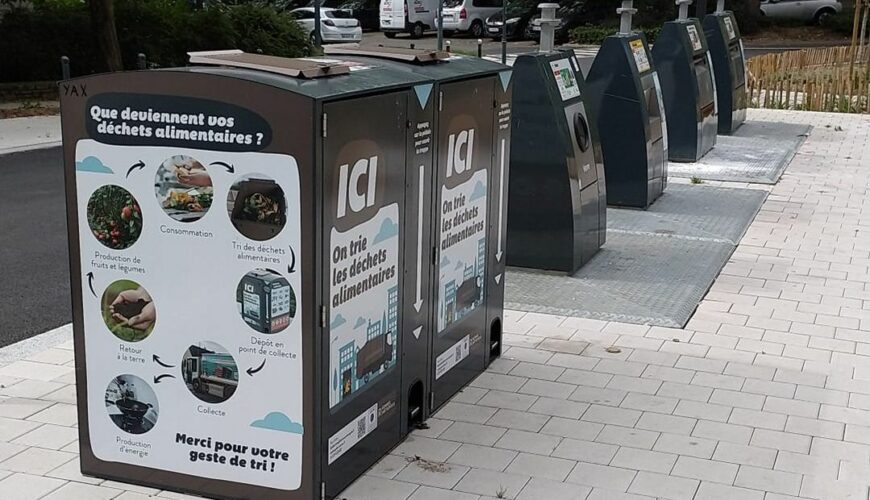
Biowaste: legal definition and new major issue for communities
Within the meaning of article L. 541-1-1 of the Environmental Code, biowaste is defined as biodegradable non-hazardous garden or park waste, as well as food or kitchen waste from households, offices, catering, trade or food processing.
In concrete terms, they cover the leftovers of meals, peels, coffee marc, faded flowers and green waste. The Ministry of Environmental Transition also points out that bio-waste still represents « one third of the unsorted French waste »This makes it a priority for local public action.
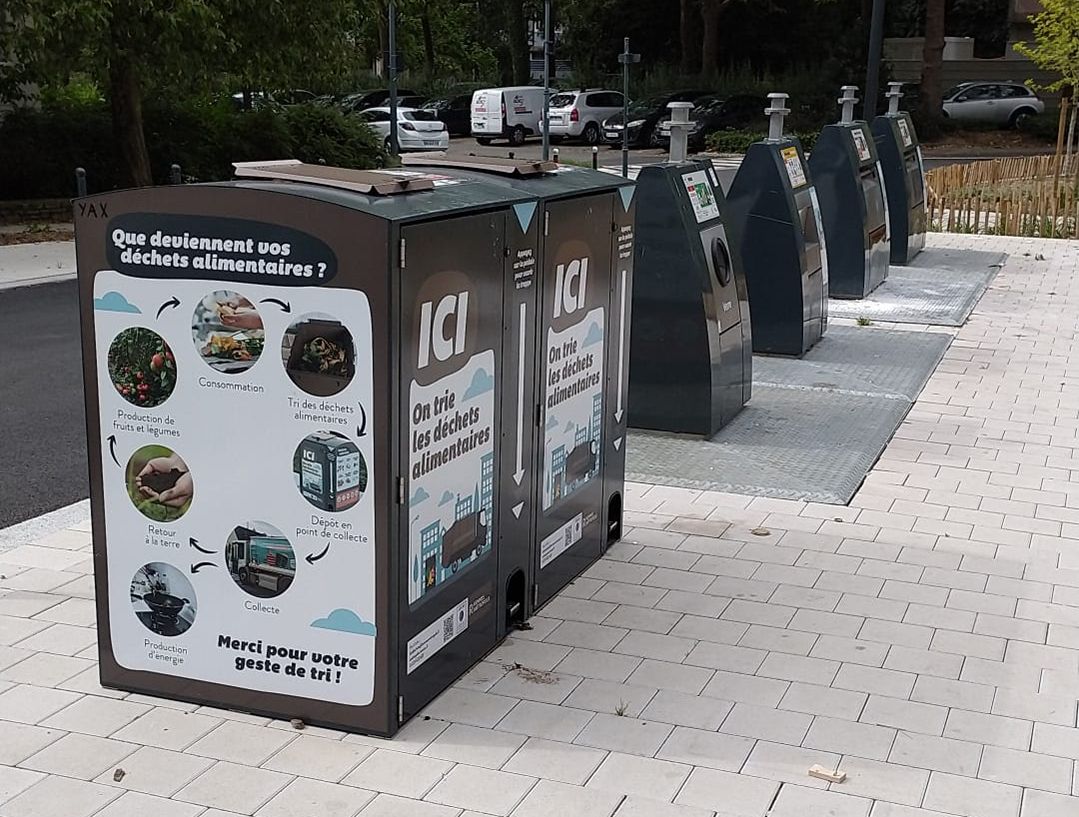
Since the rise of European and French regulations, sorting biowaste is no longer a simple good practice: it is a legal obligation. Under European law, Article 22 of Directive 2008/98/EC as amended required that, by 31 December 2023, bio-waste be separated and recycled at source, or collected separately without mixing with other waste. In French law, this trajectory was consolidated by Act No. 2020-105 of 10 February 2020, known as the AGEC Act (Anti-spousal law for a circular economy), then incorporated into the Environmental Code, in particular Article L. 541-21-1.
Since January 1, 2024, communities have been required to propose a bio-waste sorting solution for their administration.
This new regulatory framework now makes biowaste a structural issue for the territories, at the crossroads of waste, climate, soil and circular economy policies. As the State points out, the aim is not only to divert an organic fraction of the residual waste, but to organise a return to the ground of quality and a local development useful to the territory.
Why Biowaste is Strategic for Communities
For communities, good management of biowaste is an environmental, economic and institutional lever. From an operational point of view, source sorting reduces the volume of residual household waste, reduces the use of incineration and storage, and improves overall the performance of the public waste management service. ADEME (Environmental Transition Agency) points out also that this reduction in tonnages may limit certain cost increases, in particular in connection with TGAP (General tax on polluting activities). In terms of recovery, source-sorted biowaste can be directed towards composting or methanization to produce organic amendments and, as appropriate, biogas for injection into the network. The Ministry recalls that this separation of biowaste reduces both emissions associated with the disposal of residual waste and produces fertilizing materials useful for soils and green spaces.
This issue is also a matter of compliance and quality. Article L. 541-21-1 of the Environmental Code specifies that bio-wastes that have been sorted at source must not be mixed with other wastes. As of 1 January 2027, they will only be counted as recycled in an aerobic or anaerobic treatment if they have actually been sorted at source. In parallel, the Ministry states that the return to the ground must have guarantees of safety and agronomic quality; In this regard, it recalls the normative framework applicable to composts.
In this context, elected officials, technical directorates and local engineering are seeking legally secure, technically robust and acceptable solutions for users. As the ministry and ADEME recall, there is no single solution. Separate collection, proximity composting, shared composting, voluntary input or methanization must be dimensioned according to habitat typology, seasonality, truly catchable flows, agronomic opportunities and local logistical constraints. It is precisely this adaptation to the terrain that makes the deployment successful.
The MONTANIER response: bio-waste and CSR engagement for communities
The MONTANIER response is in line with this logic, with a comprehensive approach that accompanies public actors and collective restoration to concrete solutions of
cleaning, organic flow management until maintenance. Objective is double. On the one hand, helping communities meet the demands Environmental Code and the AGEC Act, while Mastering washing and disinfection facilities (container, premises, vehicle...). On the other hand, offer robust and innovative technical solutions, consistency with current challenges of soil conservation and reduction resource consumption. This approach builds on MONTANIER's expertise in water washing, disinfection, treatment and recycling equipment, including waste, bio-waste and urban cleanliness environments. It provides communities with concrete solutions adapted to field constraints, the diversity of deposits and the growing expectations for environmental performance and quality of service.
The approach is fully in line with MONTANIER's CSR strategy, notably through the CYCLA dynamic, which reflects the desire to develop circular, and sustainable solutions. MONTANIER asserts its position as a committed industrial player, capable of accompanying the territories in the implementation of more sober, efficient and coherent devices with industrial solutions of washing & disinfection in correlation with this ecological transition.
The experience gained in contact with communities and local actors thus reinforces the legitimacy of MONTANIER on the subject of bio-waste, not only as a supplier of technical solutions, but also as a trusted partner on comprehensive custom-made facilities.
Concrete solutions for cleaning, disinfection, recycling and water recovery
In the bio-waste sector, industrial cleaning solutions must meet a twofold requirement: to be simple to use and to integrate naturally into the processes of both communities and existing operators. It is precisely in this area that MONTANIER puts its expertise at the service of the players in the sector.
We support our clients in the design and deployment of solutions tailored to their operational and environmental challenges, including through:
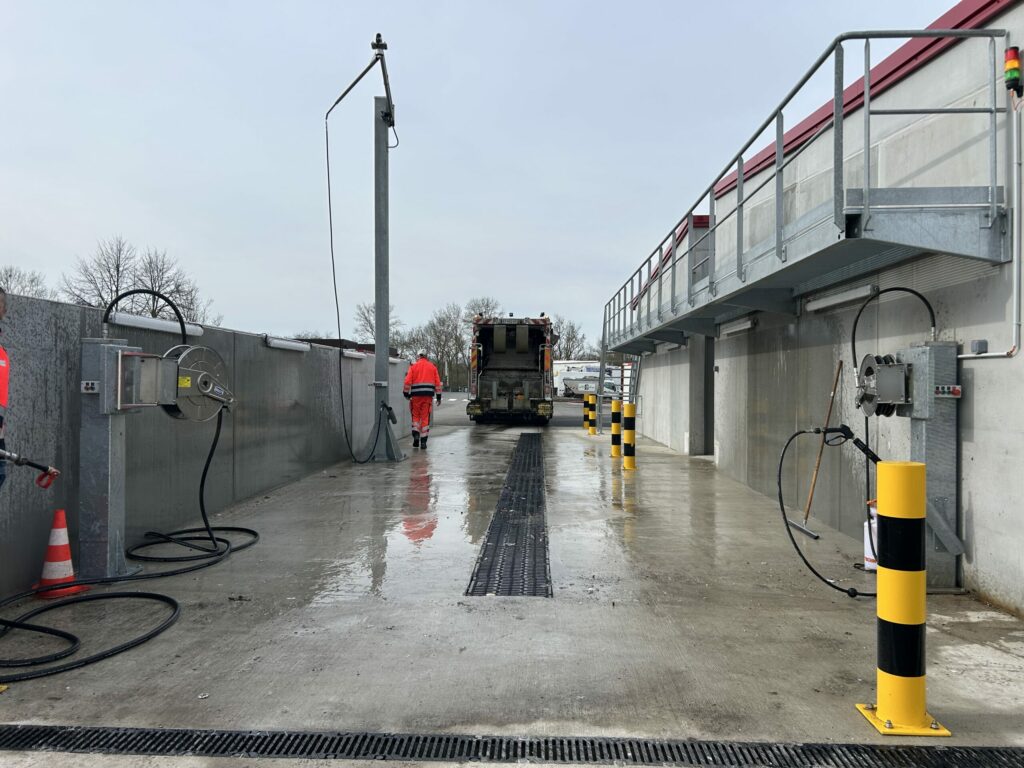
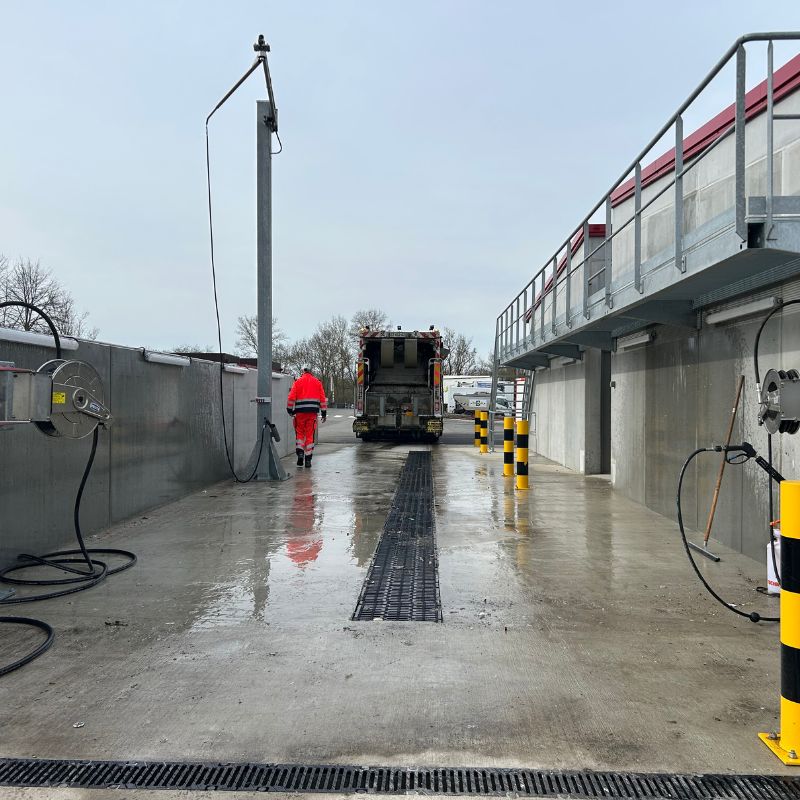
• Complete industrial washing facilities, which can be integrated within the sorting, pre-collection and more broadly in the various stages of the process. These equipments allow deep cleaning, thus helping to strengthen hygiene, improve operating conditions and preserve the quality of the working environment around organic matter.
• A range of industrial machines designed in line with the specific activities and constraints of each site:
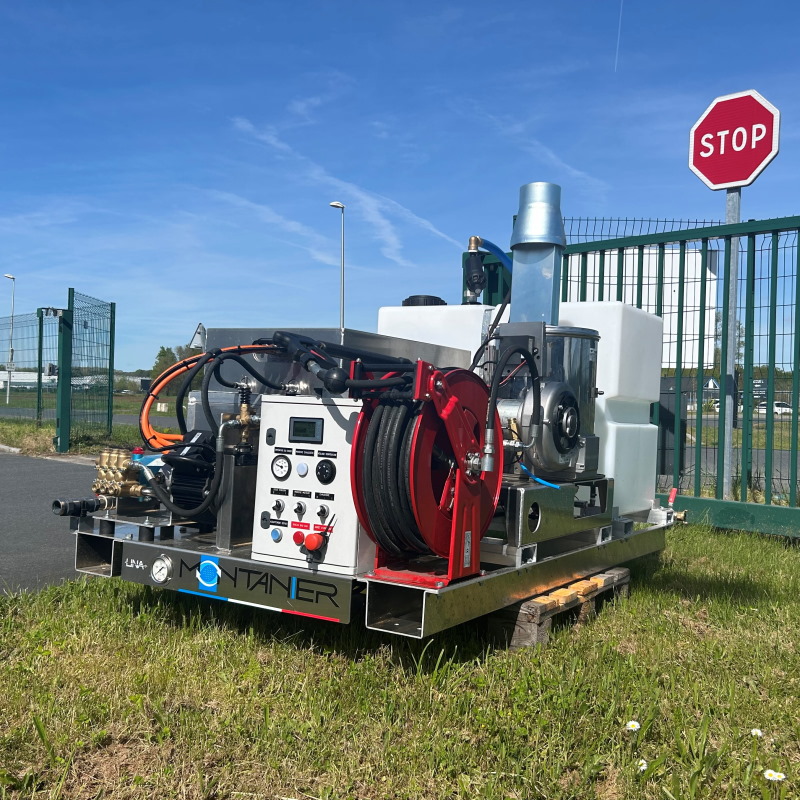
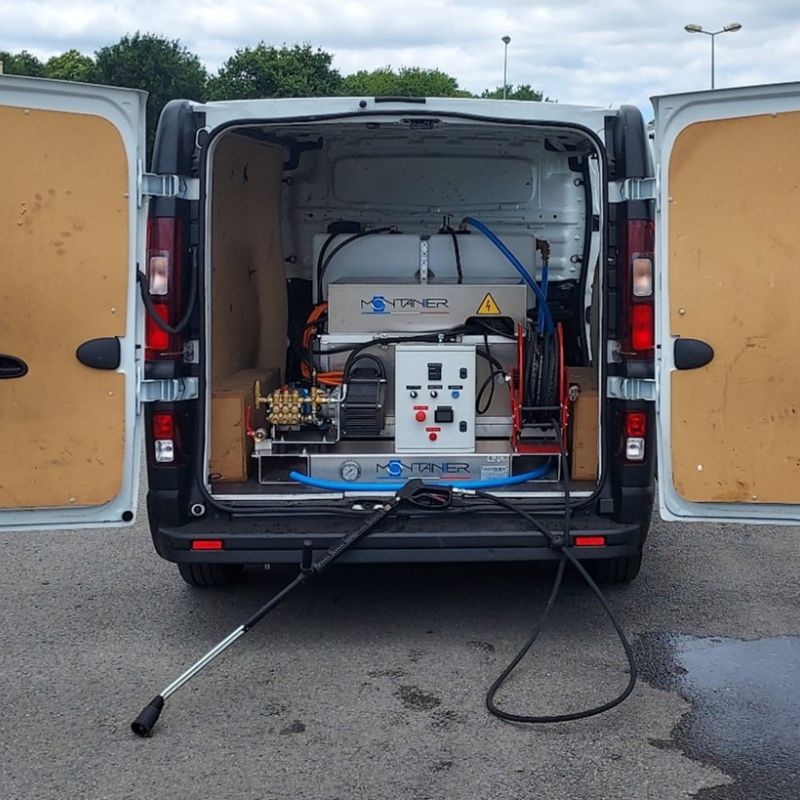
– HP washer electric self-contained water compact – Montanier
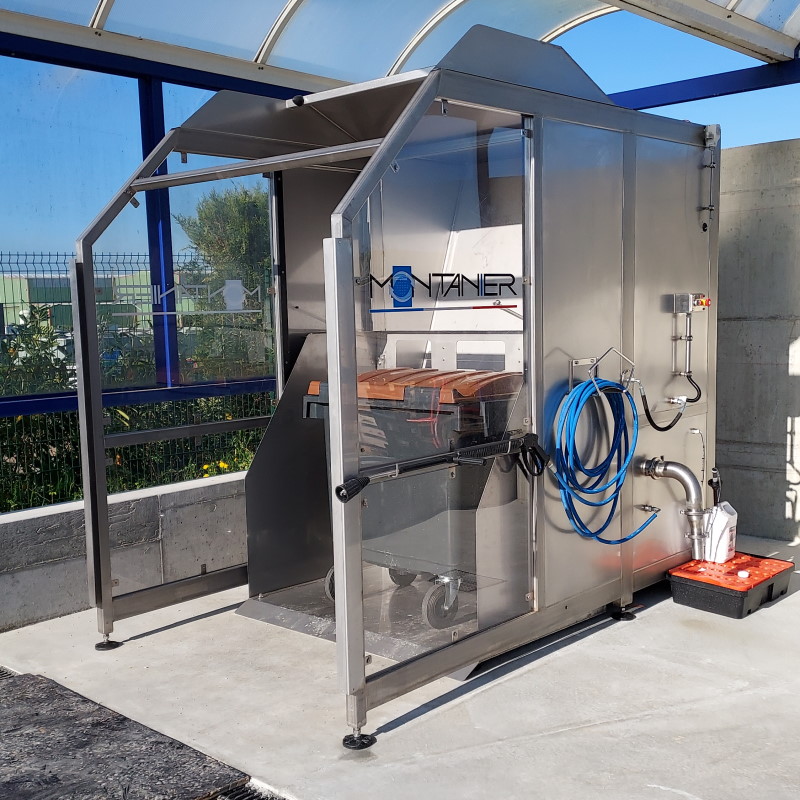
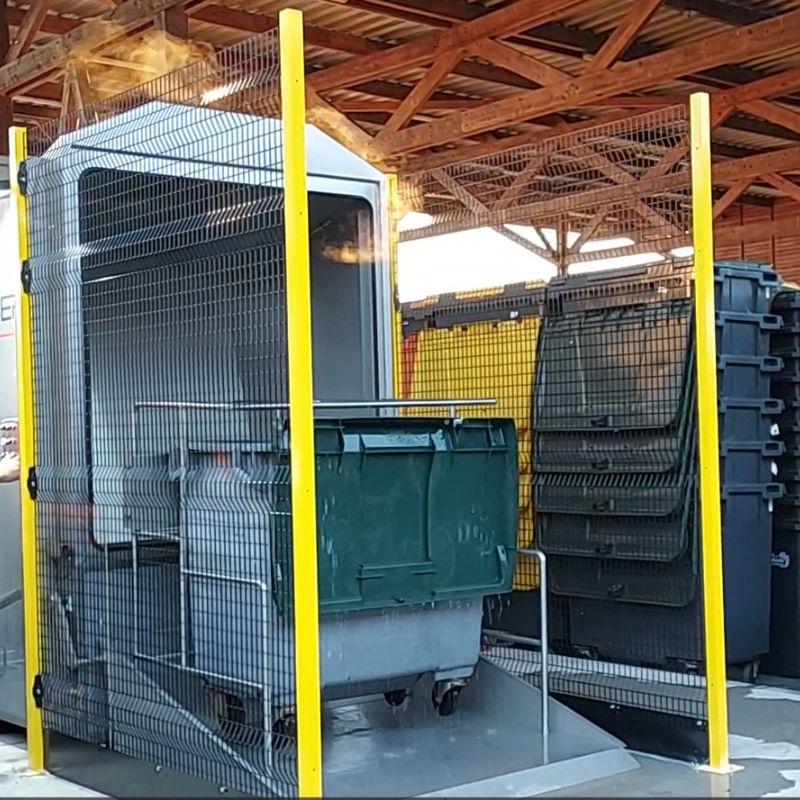
– DASRI Trancing Washer, Household Waste – Montanier Biowaste bin compatible, NF EN 840, Palox, Palox pallet box, Bac Europe...
– Interior and Exterior Interior and Exterior - Montanier Biowaste bin compatible NF EN 840, Palox, Palox box, Bac Europe...
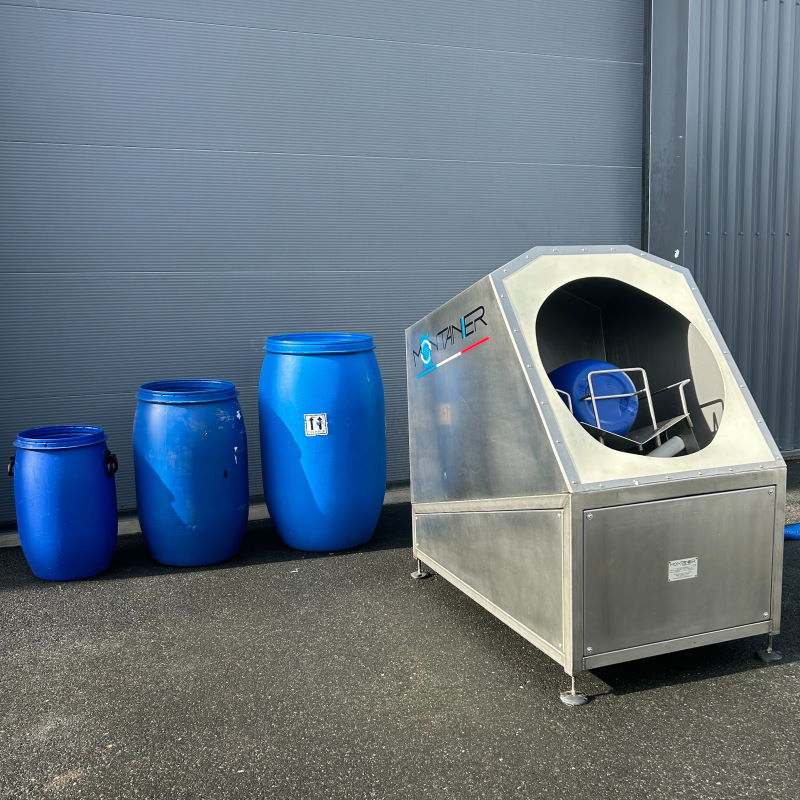
– 1-post drum washer for drums from 30L to 220L – Montanier compatible plastic and stainless steel tray
All these equipments are thought out for optimize the level of hygiene of containers, limit handling to reduce musculoskeletal disorders (MSD).
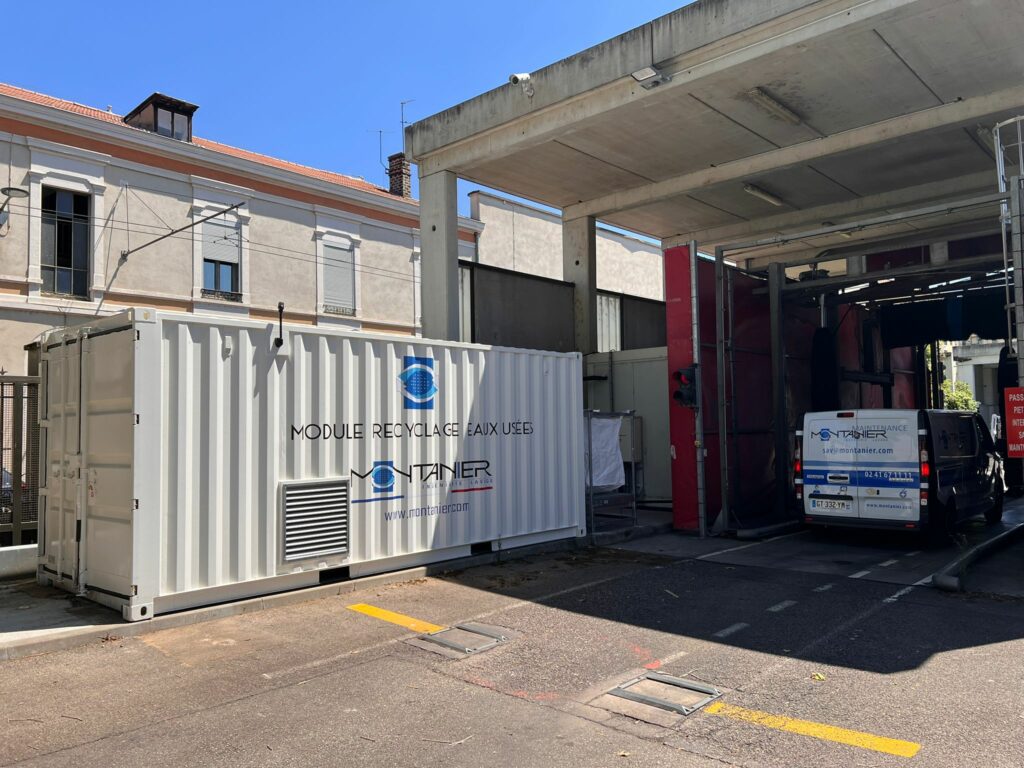
• The deployment of Water Save and Safe technology, which places water management at the heart of facility performance. This approach allows water recycling, pre-discharge treatment and storage to significantly reduce consumption and improve the overall environmental balance of equipment.
By combining a range of solutions specifically tailored to the needs of the sector with a demanding approach to optimising water resources, MONTANIER provides a comprehensive, coherent and sustainable response environmental, health and regulatory issues (ED6473, NF EN 840, NF EN ISO 15883).
Innovative solutions serving the territories
Biowaste is no longer a simple flow to be disposed of: it is now a strategic issue for communities, which must combine regulatory compliance, operational control, hygiene, logistical performance and resource development.
In this context, MONTANIER assists communities as a specialist in the design and implementation of industrial washing solutions, integrating equipment, processes and water treatment into a comprehensive and operational approach.
Our know-how enables us to offer reliable, robust and custom-sized facilities, able to meet the constraints of the field while guaranteeing efficiency of washing, sanitary quality, control of operating costs and simplicity of maintenance.
With MONTANIER, communities benefit from an industrial partner able to transform a regulatory requirement into a technical solution that is efficient, sustainable and adapted to the realities of their territory.



